Bedding & Materials
What to Check Before Choosing an Organic Duvet Cover
An organic label can be a useful starting point, but it cannot tell you everything about how a duvet cover will feel, fit, wash, or wear. Before choosing one, look closely at the certification, fiber and fabric origins, construction, closure, and care instructions.
Published November 18, 2026
A duvet cover has a quietly demanding job. It surrounds an insert, rests against the sleeper, goes through repeated laundering, and often sets the visual tone of the bed. When the fabric is described as organic, it is natural to focus on the fiber claim. But a label alone does not explain the full story: it does not necessarily tell you where the flax was grown, where the linen was woven, how the cover closes, or whether its care routine suits your household.
Those practical details matter as much as the headline claim. A well-chosen cover should fit the insert, remain secure overnight, and be manageable to clean. It should also feel right to the person using it. This guide takes a measured look at the details worth checking, using Coyuchi’s organic bedding information as a reference point where product specifications are available. The aim is not to treat one label as a guarantee of every desirable quality, but to help make comparison more informed.
Start by asking what “organic” means here
“Organic” can refer to the way a raw fiber is grown, but textile production involves more than cultivation. Fibers are processed, spun, woven, dyed, finished, sewn, packaged, and transported. A meaningful certification may set requirements for some of those steps, while other parts of the supply chain may fall outside its scope. That is why the name of a certification—and what it actually verifies—deserves a closer look.
The Global Organic Textile Standard, commonly abbreviated GOTS, is a textile-processing standard with requirements that extend beyond the farming of organic fiber. The precise scope and requirements depend on the standard’s current version and the certified operation. When a product is described as GOTS certified, check whether the claim is supported with clear certification information, and look for details that identify the product or supply-chain participants. A broad phrase such as “made with organic materials” is not automatically equivalent to a fully certified textile product.
Certification is useful, but it is not a substitute for reading the product details. It does not tell you whether a fabric is light or substantial, whether the cover has ties, or how it should be washed. Nor should it be taken as proof that every other quality claim—such as exceptional durability, a particular feel, or specific environmental benefits—has been independently established. Keep the certification in its proper role: evidence about defined standards, rather than a universal score for the finished product.
Follow the fiber-to-fabric story
For a linen duvet cover, the fiber is flax. Yet “linen” does not tell you the whole production story. Flax may be grown in one country, spun or woven in another, and sewn or finished elsewhere. These distinctions are not inherently good or bad; international textile production is common. Clear information simply helps you understand the route the material has taken and compare one product description with another.
Look for separate statements about where the flax was grown and where the fabric was woven. If the maker also identifies the place of finishing or sewing, that adds useful context. A product might, for example, describe flax grown in France and linen woven in Portugal. That is more informative than a vague claim of European origin, though it still does not answer every question about farming, processing, or transport.
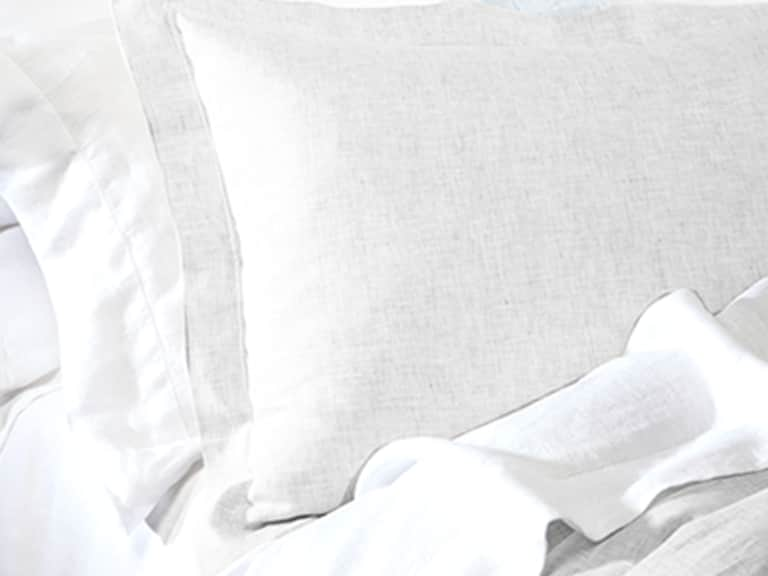
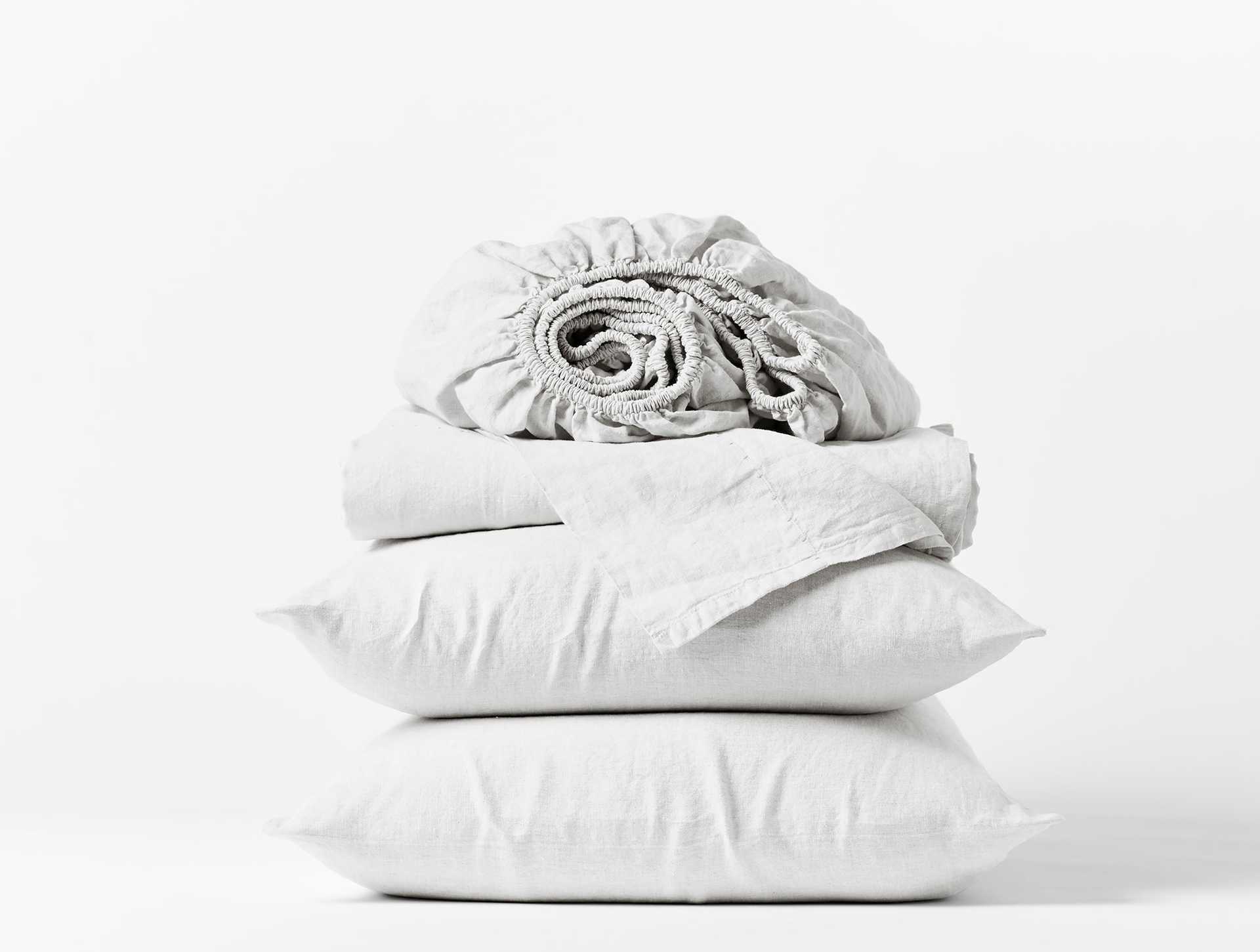
Coyuchi’s Organic Relaxed Linen Sheet Set provides a useful example of the kind of detail a shopper can look for in organic bedding: its specifications identify French-grown flax, linen woven in Portugal, GOTS certification, and cold gentle-cycle care. It is a sheet set, not a duvet cover, so its specifications should not be assumed to describe another product. The broader lesson is to seek product-specific information rather than transferring claims from one item in a collection to another.
Understand fabric weight and feel
Fabric weight is one of the most helpful specifications when it is provided, but the number is not a complete comfort rating. Weight may be expressed in grams per square metre (gsm) or ounces per square yard. A higher figure generally indicates more material by area, but it does not, by itself, reveal softness, weave openness, finish, or how the fabric will drape.
Linen commonly has a distinctive texture, and its feel can vary with yarn, weave, weight, finishing, and laundering. A relaxed or garment-washed finish may feel more lived-in from the beginning than a crisp finish. Some linen becomes softer with repeated use and washing, but “softens over time” is not a precise measure of how it will feel when new. If you are sensitive to texture, look for a detailed description of the finish and, where available, swatches or a return policy that gives you room to assess the fabric at home.
Be careful with descriptions that present linen as automatically cool in every setting. Linen’s structure can allow air to move through the fabric and can help manage moisture, but the experience depends on the weave, the surrounding bedding, the room climate, the insert, and the sleeper. A dense cover paired with a warm duvet can feel different from a lighter cover used with a breathable insert. Think about your complete sleep setup, not just the fiber name.
Check the construction, not only the surface
A duvet cover is a large textile that is handled often. Seam quality, corner construction, and finishing details can influence how it holds up in regular use. Product descriptions do not always include every construction specification, but it is worth looking for information about seams, hems, edge finishing, and any reinforcement around openings or attachment points.
A relaxed surface can be appealing, while a more tailored finish may suit a crisp, structured bed. Neither is inherently more durable. What matters is whether the construction seems appropriate for the intended use and whether the maker provides clear care instructions. If product details are sparse, asking the seller about seam construction, fabric weight, or finishing is reasonable—especially for a higher-cost purchase expected to see frequent use.
The same attention applies to decorative details. Embroidery, piping, or contrast stitching can add character, but they may affect how the cover should be washed or ironed. Check whether the instructions apply to the entire item and whether embellishments require a gentler routine than plain fabric. A beautiful detail is most practical when its upkeep is understood before the first wash.
Choose a closure that works for your routine
Closure design can seem like a small matter until the duvet shifts inside the cover. Common options include buttons, ties, snaps, zippers, and envelope-style openings. Each has practical trade-offs, and the best choice depends on how often the cover is changed, how the insert behaves, and what is comfortable to handle.
- Interior ties can fasten to loops on a duvet insert and help limit movement at the corners. Check how many ties are included and whether they are placed where your insert has loops.
- Buttons are familiar and relatively easy to inspect or replace. Note whether they are sewn securely, whether they are exposed or concealed by a flap, and whether the opening is long enough for convenient changing.
- Snaps or zippers may make an opening quick to close, but their placement and construction matter. A closure should not create an uncomfortable ridge or snag delicate fabric during laundering.
- Envelope-style openings avoid a row of fasteners, though the overlap needs to be generous enough to keep the insert covered during ordinary movement.
Details such as an interior flap, coconut shell buttons, and inside ties appear in descriptions of some organic linen duvet covers. The useful question is not whether one closure is universally best, but whether the opening is secure, accessible, and compatible with the insert you own. If the insert has no corner loops, ties may need to be knotted around a suitable point—or may not offer much benefit at all.
Confirm sizing and insert compatibility
A duvet cover size should be compared with the actual dimensions of the insert, not just the bed size on the label. “Queen” and “king” measurements can vary between brands and markets. A cover that is too small may compress the insert; one that is much larger can leave it shifting or bunching inside. Check the listed dimensions in inches or centimetres and compare them directly with your duvet.
Also check whether a product is a cover only or part of a set. The number of pillow shams, their dimensions, and whether they are included can differ. If the listing gives separate measurements for the cover and shams, use those figures rather than assuming that items sold under the same size name will fit every bed configuration.
Think about how the fabric’s weight and drape will work with your insert. A heavier linen cover may feel substantial, while a lighter fabric can fall differently. Neither will transform an insert’s warmth rating, but the full combination influences the feel of the bed. If you use a duvet in a warm climate or sleep hot, consider the cover together with the insert and any sheets or blankets layered beneath it.
Read the care label before you buy
Care instructions are not an afterthought. They help determine how a duvet cover fits into real life. Look for recommended water temperature, cycle, detergent guidance, drying method, ironing advice, and any restrictions such as avoiding bleach. If the product calls for cold water and a gentle cycle, consider whether your household can follow that routinely.
Linen care varies by product and finish, so avoid relying on a single rule for every linen textile. Some covers may be machine washable, while others may have more specific instructions. Washing at a lower temperature and using a gentle cycle can be appropriate when the maker directs it; drying on low or removing the cover promptly may help avoid excessive creasing or heat exposure. The item’s own care label takes priority over generalized advice.
Check whether the instructions recommend washing with similar colours, advise against bleach, or suggest line drying. Consider the size of your washing machine as well. A duvet cover needs enough room to move through the wash; overloading a machine can make cleaning less effective and place additional strain on seams. A large cover may require a suitably sized domestic machine or professional laundering, depending on the product and household equipment.
Wrinkles are part of linen’s familiar character, but expectations differ. Some shoppers like a relaxed, naturally rumpled finish; others prefer a pressed bed. If ironing matters to you, check whether warm ironing is permitted and whether the instructions suggest ironing while the fabric is slightly damp. If it is a task you would rather avoid, see whether the maker describes the cover as washed or relaxed, while remembering that marketing language cannot guarantee a particular result after repeated laundering.
Look at environmental claims with care
Organic flax can be one part of a more considered material choice, but no single fiber claim answers every environmental question. The overall impact of a textile can depend on farming practices, processing, dyes and finishes, energy use, water use, transport, product lifespan, and what happens at the end of its useful life. Avoid treating words such as “natural,” “sustainable,” or “eco-friendly” as complete explanations.
More specific disclosures are easier to assess. A certification name, a stated fiber composition, an identified growing or weaving location, and clear care information give readers concrete points to verify. If a brand makes a broad environmental claim, look for supporting details and read the claim in context. Certification systems have different scopes; one cannot be substituted for another simply because both appear on a textile label.
Durability also matters in practical terms. A cover that remains useful for many years may avoid frequent replacement, but durability cannot be inferred from “organic” alone. Construction, care, frequency of use, household washing conditions, and the handling of the textile all play a role. Look for transparent product specifications and consider whether the expected maintenance aligns with your habits.
A simple comparison checklist
When comparing two or more options, put their specifications side by side. A short checklist can make differences easier to spot:
- What is the exact fiber composition, and what certification is named?
- Does the certification apply to the finished textile, the processing stages, or a defined part of the supply chain?
- Where was the flax grown, and where was the linen woven or finished?
- Is fabric weight provided? If so, what unit is used?
- What finish is described: crisp, garment-washed, stone-washed, or relaxed?
- What are the cover’s dimensions, and do they match your duvet insert?
- Does the cover have ties, buttons, snaps, a zipper, or an envelope opening?
- What is included, and are shams or other pieces sold separately?
- Can you follow the stated washing and drying instructions with the equipment you have?
The best choice is the one that fits your everyday life
An organic duvet cover is not defined by a certificate alone. Certification can help clarify how certain materials or processing steps are assessed, while fiber origins provide supply-chain context. Fabric weight and finishing shape the tactile experience; sizing and closures affect how the cover behaves on the bed; care directions determine whether it is practical to keep clean over time.
Read the specifications as a whole. Treat each claim according to what it actually tells you, and distinguish a verified certification from descriptions of feel or performance. If an important detail is missing—such as the cover’s dimensions, the number of ties, or the recommended wash temperature—ask for clarification before deciding. A little careful checking can turn an attractive organic label into a more complete understanding of the textile you are bringing home.
Ultimately, the right duvet cover should suit your insert, your preferred feel, your laundry routine, and your expectations for sourcing transparency. The most compelling choice is not necessarily the one with the longest list of promises. It is the one whose materials, construction, and care requirements are clearly explained—and whose everyday details work for you.